Flat Roof Solar — Is It Worth It?
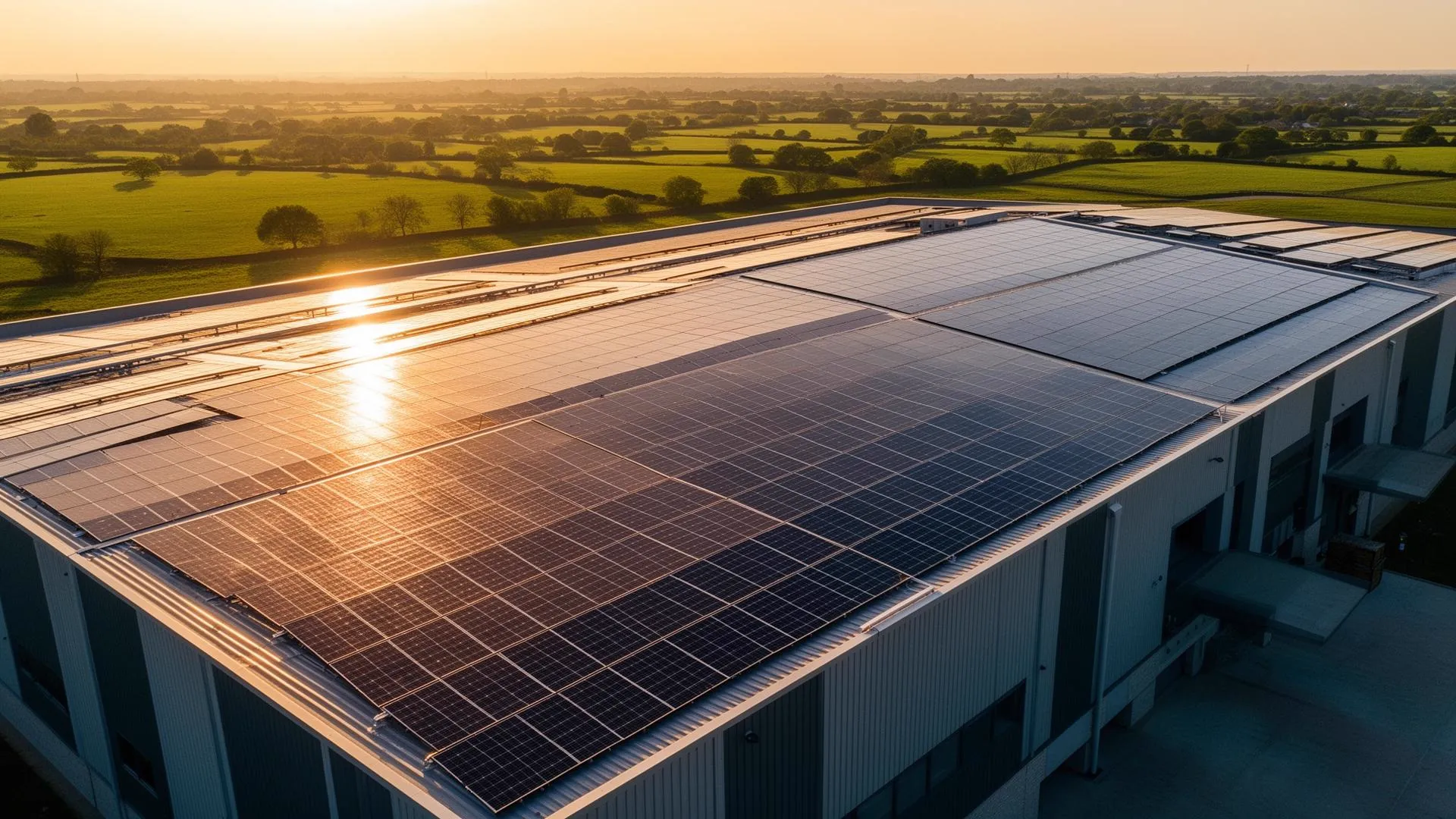
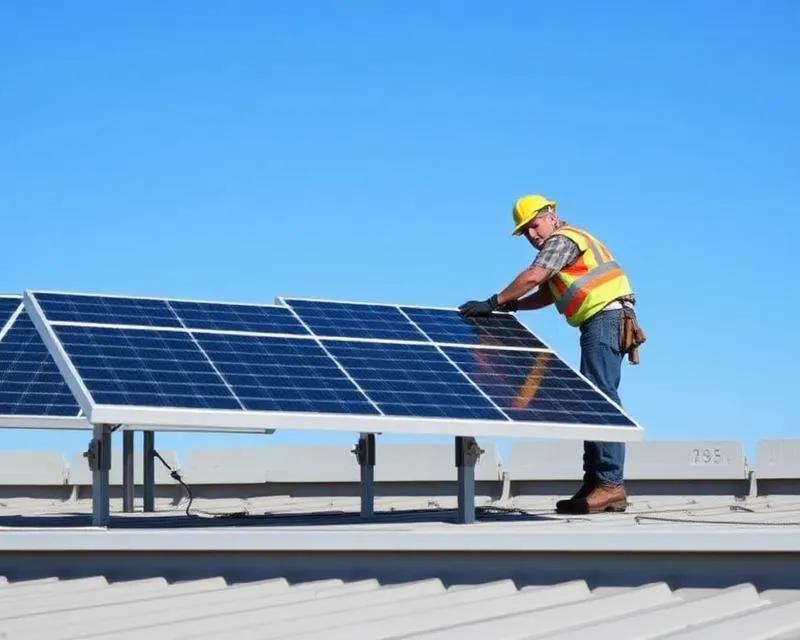
Flat roofs on commercial buildings, warehouses, apartment blocks, and modern homes with flat roofs are excellent locations for photovoltaic installations. Unlike pitched roofs, they offer greater flexibility in selecting panel tilt angles and orientation, allowing for maximum energy yield optimization.
In Poland, an increasing number of investors are choosing flat roof PV installations — both in the commercial segment (warehouses, offices, logistics centers) and in residential construction (modern flat-roof homes).
Types of Mounting Structures
Three main types of mounting structures are used on flat roofs:
Optimal Tilt Angle
Under Polish conditions (latitude 50-54°N), the optimal panel tilt angle is:
| Tilt Angle | Annual Yield (% of optimum) | Application |
|---|---|---|
| 30-35° | 100% | Optimal angle for maximum annual yield |
| 15-20° | 95-97% | Compromise: less row shading, higher density |
| 10° (E-W) | 90-92% | East-west system, max. surface utilization |
| 0° (horizontal) | 87-89% | Minimal installation, easy maintenance |
For commercial roofs with limited area, E-W systems at 10-15° angles are often the most economically advantageous — allowing installation of up to 30-40% more power on the same surface area.
Calculating Row Spacing
A key design aspect is minimizing mutual panel shading. Row spacing depends on:
For a 30° angle in central Poland (52°N), row spacing should be approximately 1.7-2.0 × panel height. At 15°, 1.2-1.4 × height is sufficient.
Roof Load Capacity — Key Parameter
A structural assessment is required before installation. Typical loads:
| Element | Load [kg/m²] |
|---|---|
| Photovoltaic panels | 11-14 |
| Mounting structure | 3-8 |
| Ballast (concrete blocks) | 15-40 |
| Snow (zone II, Poland) | 90-120 |
| Wind (uplift/suction) | -30 to -50 |
Total additional PV load: 30-60 kg/m². Most flat roofs are designed with load-bearing reserves, but older buildings require verification.
Roof Membrane Protection
Installation on flat roofs with waterproofing (bitumen, PVC/TPO/EPDM membrane) requires special attention:
Flat Roof Installation Costs
Flat roof installation is typically 10-20% more expensive than pitched roof due to additional mounting structure and ballast:
| System Size | Net Cost (pitched roof) | Net Cost (flat roof) |
|---|---|---|
| 10 kWp | 28,000 - 35,000 PLN | 32,000 - 40,000 PLN |
| 50 kWp | 130,000 - 160,000 PLN | 150,000 - 185,000 PLN |
| 100 kWp | 250,000 - 310,000 PLN | 290,000 - 360,000 PLN |
System Optimization with Microinverters
On flat roofs, especially those with partial shading (air conditioners, chimneys, parapets), microinverters or power optimizers should be considered instead of traditional string inverters. Each panel operates independently, eliminating losses from partial shading of even a single module.
Maintenance
Flat roof panels require more frequent cleaning than pitched roof installations — the lower angle means slower water runoff and greater dust accumulation. Recommended inspections: twice yearly (spring and autumn).
FNC Poland designs and installs flat roof photovoltaic systems with full structural assessment and 25-year performance warranty.