LiFePO4 vs NMC — Key Differences
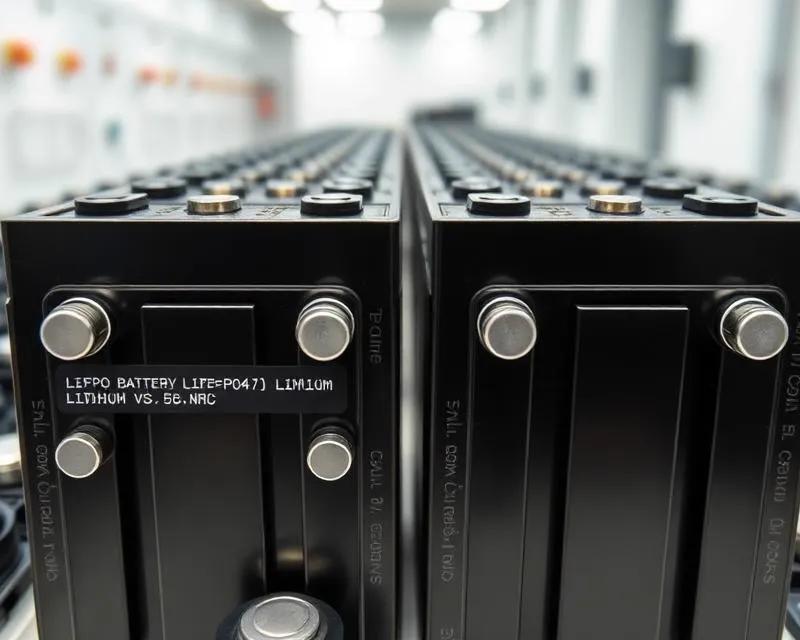
When choosing an energy storage system, you face a fundamental question: LiFePO4 (lithium iron phosphate) or NMC (nickel manganese cobalt)? Both technologies have their advantages and limitations, and the right choice depends on your priorities.
Technical Parameter Comparison
| Parameter | LiFePO4 (LFP) | NMC |
|---|---|---|
| Energy density | 90-160 Wh/kg | 150-250 Wh/kg |
| Cycle count | 3,000 - 6,000 | 1,000 - 2,000 |
| Lifespan | 15-20 years | 8-12 years |
| Nominal voltage | 3.2 V/cell | 3.6-3.7 V/cell |
| Thermal safety | Very high | Medium |
| Operating temp. | -20°C to 60°C | -20°C to 55°C |
| Self-degradation | 2-3% annually | 3-5% annually |
| Cost per kWh | 1,800-2,500 PLN | 1,500-2,200 PLN |
| Cost per cycle | 0.3-0.8 PLN | 0.8-2.2 PLN |
Safety — LiFePO4 Wins
The biggest advantage of LiFePO4 is thermal safety. LFP cells do not undergo thermal runaway even when overheated to 270°C. NMC can experience thermal runaway at just 210°C.
Lifespan — LiFePO4 Lasts Longer
LiFePO4 offers 3,000-6,000 full charge/discharge cycles, while NMC offers 1,000-2,000. At one cycle per day, LFP lasts ~14 years vs. NMC's ~4 years.
Economics — Cost per Cycle
While NMC is cheaper per kWh of capacity, LiFePO4 wins on cost per cycle:
LFP is 2.7× cheaper per delivered kWh of energy!
FNC Poland Recommendation
For residential and commercial energy storage, we unequivocally recommend LiFePO4 technology. The higher purchase price is repeatedly compensated by longer lifespan, higher safety, and lower cost per cycle.
FNC Poland installs LiFePO4 energy storage from leading manufacturers: BYD, Huawei LUNA, Fox ESS, SolarEdge. Each system comes with a minimum 10-year manufacturer warranty.