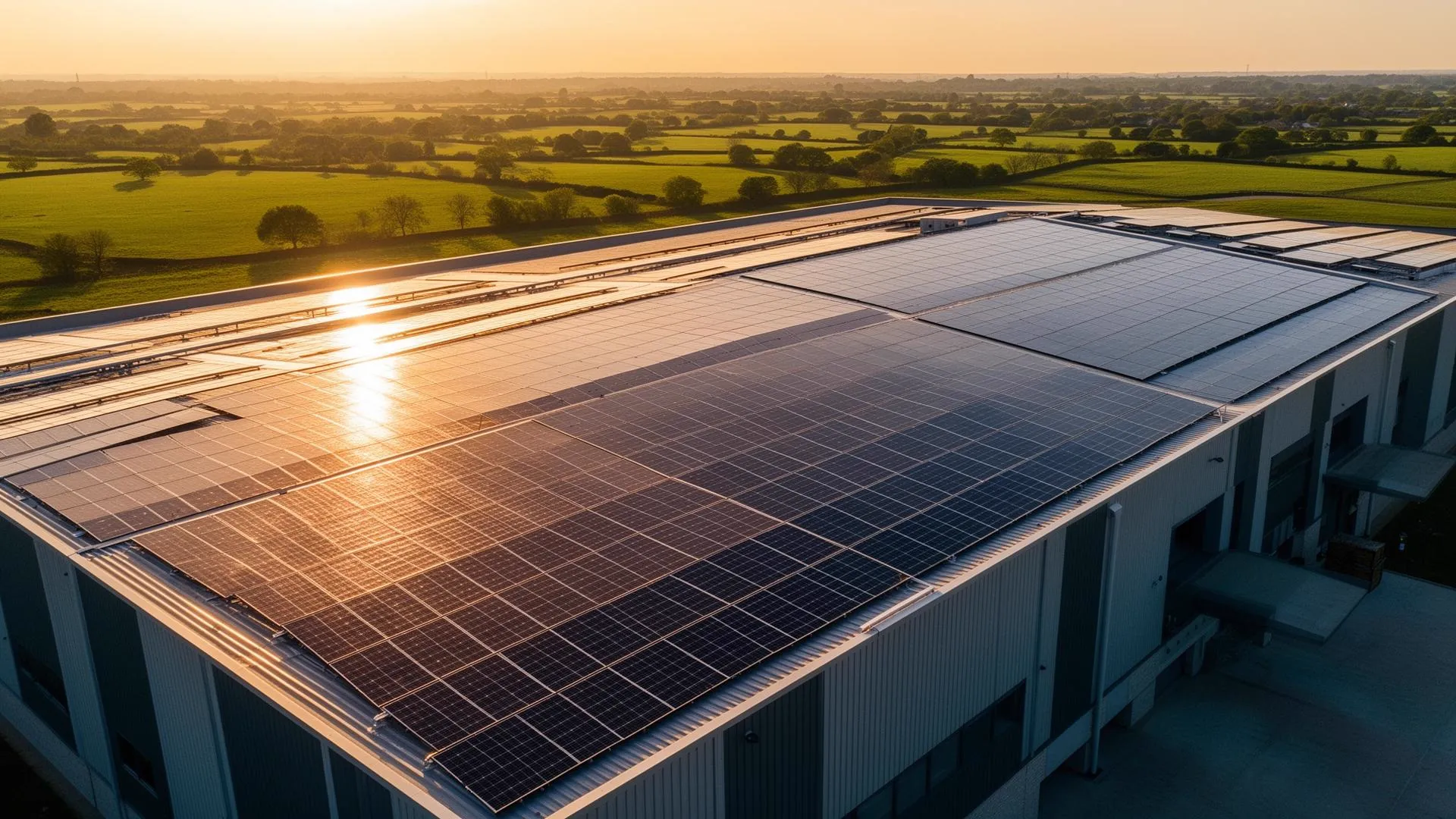
Since net-billing took effect, prosumers no longer settle in kilowatt-hours but in the value of energy — and that value changes hour by hour. In 2026 the system is based on market prices RCEm (monthly settlement) or RCEg (hourly settlement), and energy exported to the grid goes into a prosumer deposit that can be used within 12 months. The problem is that on sunny days, between 10 a.m. and 4 p.m., RCE prices can drop close to zero, and sometimes even go negative — energy exported at that time is worth a fraction of what you pay to buy it back in the evening.
Why 1 kWh consumed on-site is worth more
The math is simple. Selling surplus at midday RCE prices often fetches PLN 0.10-0.25/kWh. Buying missing energy in the evening costs PLN 0.80-1.10/kWh (purchase price plus distribution and fees). The difference means every kilowatt-hour consumed on-site instead of exported and bought back later is worth 2-3 times more in real terms. This is a fundamental shift from the old net-metering model, where only the quantity ratio of 1:0.8 mattered.
Self-consumption: with and without storage
A typical home with PV alone, no battery, reaches self-consumption of just 25-35% — the rest of the output is lost during peak production hours when nobody is home or appliances aren't running. A battery, charged with surplus during the day and discharged in the evening and morning, raises that figure to 60-80%, depending on how well the capacity matches consumption and the household's daily profile.
| Scenario | Self-consumption | Grid energy in the evening |
|---|---|---|
| PV only | 25-35% | High |
| PV + 5 kWh storage | 45-55% | Medium |
| PV + 10-15 kWh storage | 65-80% | Low |
How to size your battery
Two proven rules of thumb work well:
In practice both approaches give similar results, and it's worth cross-checking them before ordering a specific model. A good complement is a one-day reading from the balancing meter or the inverter's app — it shows exactly when the home actually consumes energy, not just how much it needs over 24 hours.
The daily consumption profile matters more than capacity alone
Two homes with identical annual consumption can need very different batteries. A home where someone works remotely and runs the washing machine or dishwasher at midday naturally reaches higher self-consumption even without a battery, since part of the output is used right away. A home where everyone returns after 5 p.m. exports almost all of its panel output to the grid at deposit prices and then buys expensive electricity in the evening. In that second case a battery makes much more economic sense and pays back faster, because it fully exploits the price gap between buying and selling.
LFP modularity and staged expansion
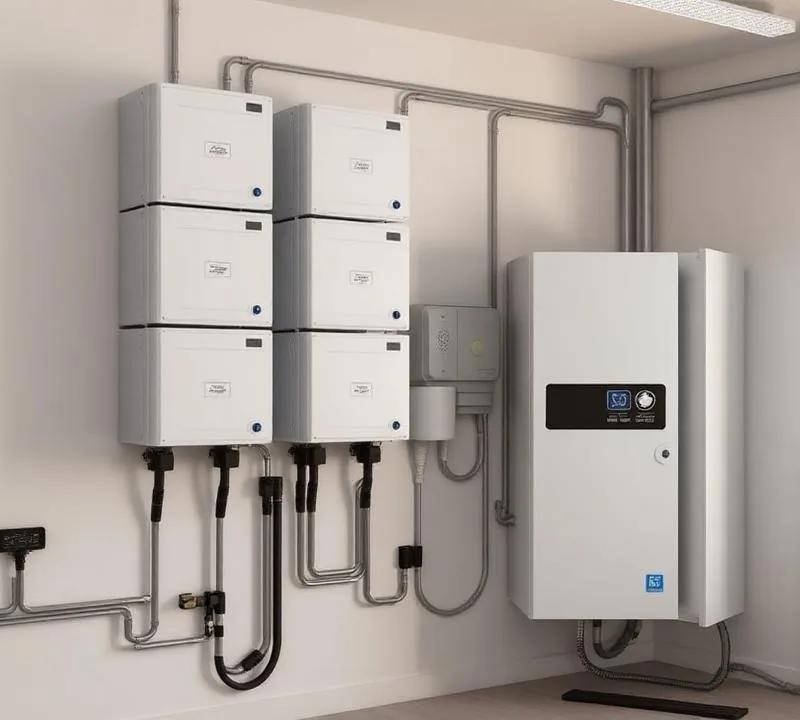
Modern batteries built on LFP (lithium iron phosphate) cells come in modules of around 5 kWh that can be connected in parallel. This lets you start with a smaller investment — say 5 kWh — and add another module in a year or two as consumption changes (an EV, a heat pump, a growing family). LFP today has an edge over older chemistries: longer lifespan (typically 6,000-8,000 cycles), better thermal safety, and stable capacity for most of its service life.
Control logic and operating modes
Simply owning a battery doesn't guarantee maximum self-consumption — what matters is the operating mode set in the hybrid inverter or Energy Management System (EMS). Self-consumption priority mode charges the battery with surplus during the day and only discharges it once household demand exceeds current PV output. Some systems also allow additional charging from the grid during the lowest RCE price hours, which mainly makes sense in winter when PV output is low but daily price swings are still visible. A well-configured system can add several extra percentage points of real self-consumption without any hardware changes.
Example: 8 kWp home, 5,000 kWh/year
Assume an 8 kWp system producing around 8,000 kWh a year, a home consuming 5,000 kWh a year, a purchase price of PLN 0.90/kWh and an average RCE sale price of PLN 0.20/kWh.
The difference in annual energy costs reaches roughly PLN 1,300-1,500 in favor of the battery variant — not even counting resilience during grid outages. At a cost of roughly PLN 25,000-35,000 net for a 10 kWh battery, after subsidies and tax relief the simple payback period from bill savings alone typically falls in the 10-15 year range — and shortens further if an EV or a heat pump raises evening and night consumption.
Subsidies and the tax relief
The Przydomowe Magazyny Energii (KPO) program for prosumers with a 2-20 kW microinstallation covers up to 50% of eligible costs, up to PLN 28,000 (PLN 22,000 if a PV subsidy was used before). A minimum 2 kWh battery is required. Application windows are short and close fast, so it pays to have documentation ready before one opens. Regardless of the subsidy, storage costs can also be settled under the PIT thermal modernization relief — a deduction from income of up to PLN 53,000 per person (PLN 106,000 for a married couple), provided you have VAT invoices and complete the investment within 3 years.
What to check before buying
Before signing a contract, it's worth verifying a few things: whether the hybrid inverter supports off-grid operation (backup/UPS function), the declared cycle count and residual-capacity warranty after 10 years, and whether the system allows adding further modules without replacing the whole set. This determines whether the investment will still make sense once the home's energy profile changes in a few years.
A well-sized battery is no longer a premium add-on — under net-billing and midday negative prices, it decides whether the whole installation pays off. Before you calculate your return, check the energy storage offer and run your numbers in the calculator. It's also worth comparing available financing options, especially if you plan to combine storage with expanding your PV system.