Solar Panels in Winter — Facts and Myths
One of the most common questions from potential investors is: "Do panels work in winter?" The answer is yes, but with lower efficiency than in summer. Understanding production seasonality is key for realistic investment assessment.
Annual Production Distribution
A typical 10 kWp installation in central Poland (52°N) produces:
| Month | Production [kWh] | % of Annual |
|---|---|---|
| January | 250-350 | 2.5-3.5% |
| February | 350-500 | 3.5-5% |
| March | 700-900 | 7-9% |
| April | 900-1,100 | 9-11% |
| May | 1,100-1,300 | 11-13% |
| June | 1,100-1,350 | 11-13.5% |
| July | 1,050-1,300 | 10.5-13% |
| August | 1,000-1,200 | 10-12% |
| September | 750-950 | 7.5-9.5% |
| October | 500-700 | 5-7% |
| November | 250-400 | 2.5-4% |
| December | 200-300 | 2-3% |
Temperature Effect — Winter Is Better!
Solar panels paradoxically work more efficiently in low temperatures. On a frosty, sunny winter day, panels can produce 110-115% of nominal power!
Snow Impact
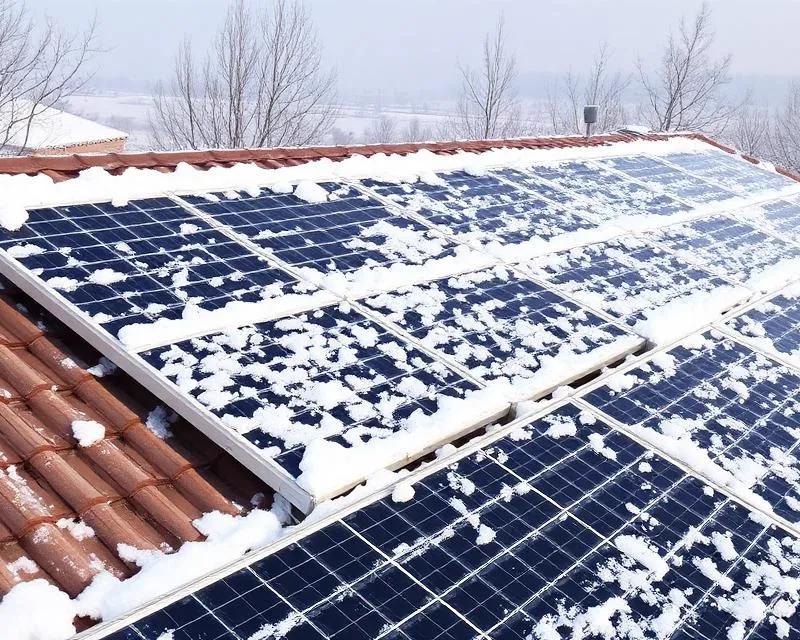
Snow on panels can limit production by 2-5% annually. But panels mounted at > 25° self-clean. Light reflection from ground snow (albedo) can increase production by 5-10% on sunny winter days.
FNC Poland performs installations year-round, regardless of season and weather conditions.